
You've been researching drone careers and keep seeing mapping, surveying, and photogrammetry mentioned everywhere. The reality: mapping and photogrammetry are open to almost anyone with the right training, but legal surveying has strict education requirements. Once you understand these pathways, picking the right training becomes much clearer.
When I started researching this myself, I got overwhelmed by all the different certificates and courses being promoted. Turns out, the decision is much simpler than most training companies make it seem.
Which training do you need? If you want quick entry into drone work, mapping training plus Part 107 gets you earning in 1 to 3 months. For legal property surveys, you need a 4-year surveying degree plus licensing. Photogrammetry sits in the middle, requiring technical training but no formal degree. Most beginners start with mapping, then specialize based on market demand.
By the end of this guide, you'll know exactly which training path matches your goals and how to get started today.
Always check current FAA sources for the latest regulations. Drone training requirements can change, and some states have additional rules. | Updated August 2026
Quick Decision: Which Training Path Is Right For You?
| Your Goal | Training Needed | Education Required | Time Investment | Can Start Earning |
|---|---|---|---|---|
| Construction mapping | Part 107 + mapping course | Online course only | 1 to 3 months | Quick income potential |
| Real estate photos | Part 107 + mapping course | Online course only | 1 to 3 months | High demand field |
| Legal boundary surveys | Surveying degree + license | 4-year degree required | 5 to 8 years | Highest income potential |
| 3D building models | Part 107 + photogrammetry course | Online course only | 2 to 4 months | Technical specialization |
| Survey assistant work | Part 107 + assistant course | Online course only | 3 to 6 months | Stable employment |
| Agriculture mapping | Part 107 + mapping course | Online course only | 1 to 3 months | Growing market |
The simple rule: Only legal surveying requires a formal degree. Everything else can be learned through specialized courses and practice.
What Each Field Actually Does
Drone Mapping (Most Accessible Entry Point)

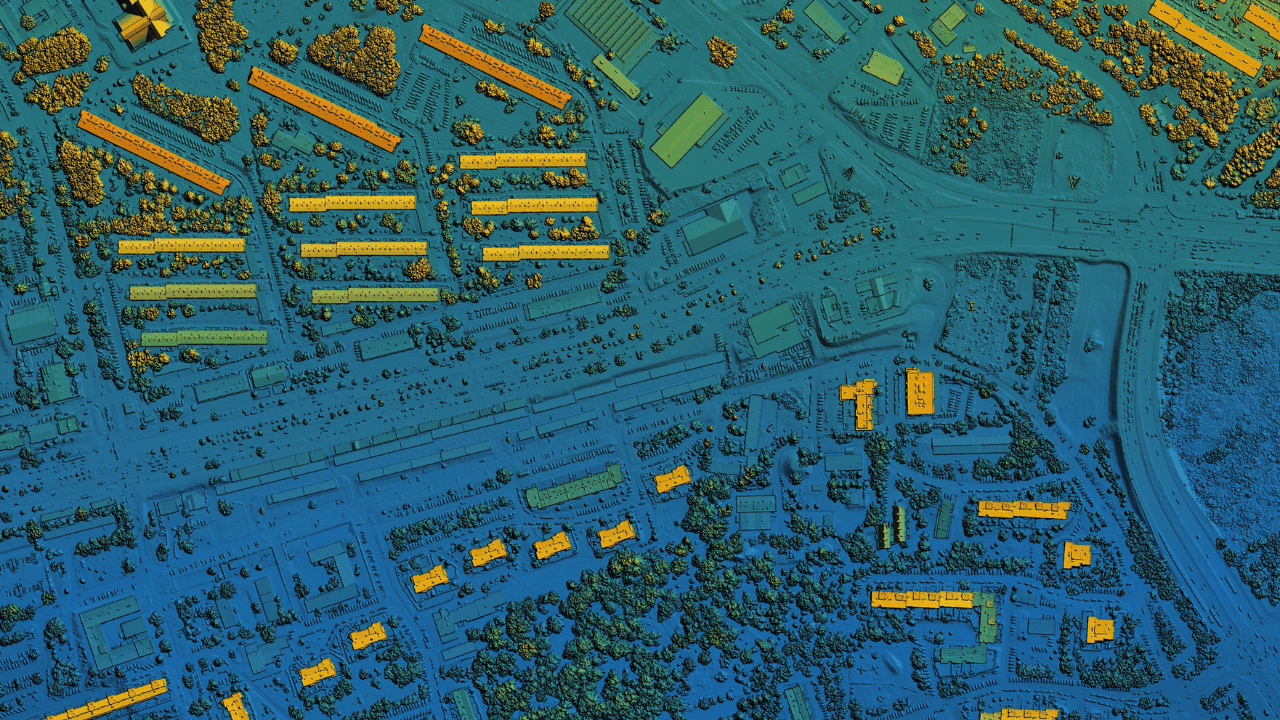
Takes aerial photos and stitches them together into maps and basic measurements. No formal degree or survey license required for most commercial work.
What you'll create: Overhead maps, area measurements, progress reports, volume calculations for construction sites.
Common jobs: Construction progress monitoring, farm field analysis, real estate marketing, site documentation.
Entry barrier: Low. Just need Part 107 plus targeted mapping training.
From what I've found researching the market, mapping has the most job opportunities and the fastest path to earning income.
Drone Surveying (Two Different Career Levels)
Support roles (No degree required):
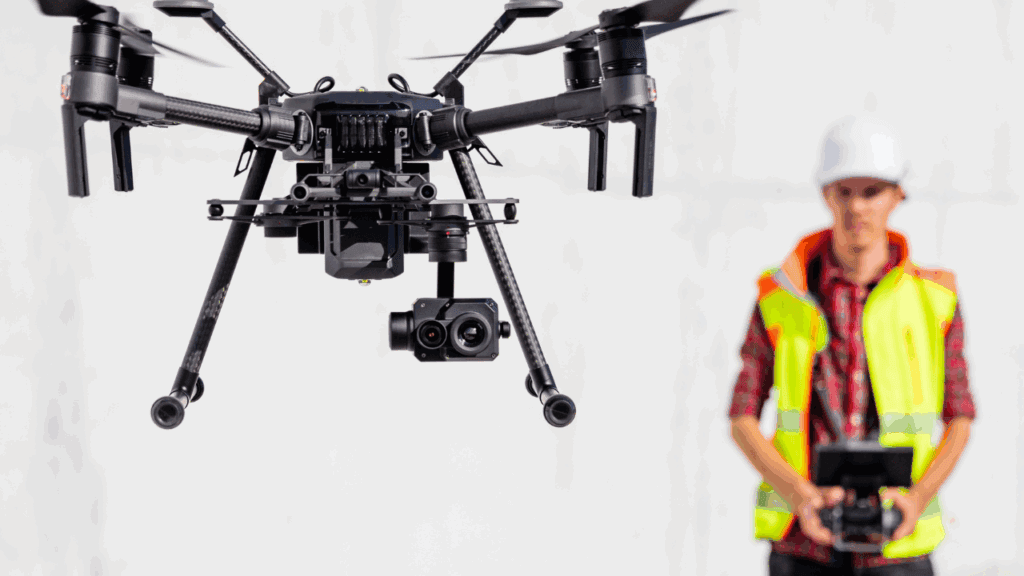
Work as drone technicians or mapping assistants under licensed surveyors. You capture site data, set ground control points, and assist with fieldwork.
Licensed surveyor roles (Degree required):
Legal boundary surveys and regulatory deliverables that require formal surveyor license earned after surveying/geomatics degree and board exams.
What licensed surveyors create: Legally certified boundary maps, topographic surveys, floodplain maps, engineering layouts. All requiring professional sign-off.
Reality check: Most people think "surveying" automatically means you need a degree. Actually, many survey companies hire drone operators as assistants. Only the final legal sign-off requires a licensed surveyor.
Photogrammetry (Technical but Accessible)

Uses drones and overlapping images to build accurate 3D models. No degree or licensing required for most commercial work, just dedicated training and portfolio development.
What you'll create: Detailed 3D models, digital twins, terrain analysis, engineering visualizations.
Common jobs: GIS analysis, construction modeling, mining surveys, environmental studies, architecture documentation.
Entry barrier: Medium. Requires technical software skills but no formal education.
Training Requirements Breakdown
Getting Your Part 107 License (Required for All Paid Work)
Cost: $175 test plus study materials ($50 to $150)
Time: 2 to 4 weeks of study for most people
Process: Online study, schedule test at authorized center, pass with 70%+
Based on FAA data and forum discussions, about 85% of people pass on their first try with proper study.
Mapping Training (After Part 107)
Basic commercial mapping course: $300 to $800
What you'll learn:
- Flight planning software training
- Image overlap and quality standards
- Ground control point setup
- Processing photos into maps
- Basic accuracy checking
Time commitment: 1 to 3 weeks part-time practice after course completion.
Reality check: Most employers care more about portfolio examples than certificates for mapping work. Focus on hands-on practice.
Surveying Training Options
Support/Technician Track (No Degree Required):
- Survey assistant courses: $500 to $1,500
- Learn workflow support, GCP setup, data collection
- Work under licensed surveyor supervision
- Time: 1 to 3 months to become competent assistant
Licensed Surveyor Track (Degree Required):
- Education: 3 to 4 year accredited surveying/geomatics degree
- Supervised experience: 2 to 4 years depending on state
- Licensing exams: Professional surveyor examinations
- Time: 5 to 8 years total to become fully licensed
- Cost: $40,000 to $120,000 for degree plus exam/license fees
Photogrammetry Training (After Part 107)
Basic photogrammetry course: $500 to $2,000
What you'll learn:
- Advanced flight planning for 3D capture
- Processing software training (Pix4D, Agisoft, DroneDeploy)
- 3D model creation and quality control
- Accuracy validation methods
Advanced certification: $1,500 to $4,000
- Complex project workflows
- Survey grade accuracy techniques
- Specialized industry applications
Time commitment: 2 to 6 months to become proficient for most commercial work.
Complete Training Cost Comparison
| Path | Minimum Investment | Realistic Investment | Time to First Paid Work | Income Potential |
|---|---|---|---|---|
| Mapping | $500 (Part 107 + basic course) | $1,200 (includes equipment/software) | 1 to 3 months | $200 to $800 per project |
| Survey Assistant | $800 (Part 107 + assistant course) | $2,000 (includes field equipment) | 3 to 6 months | $40,000 to $60,000 annually |
| Photogrammetry | $700 (Part 107 + basic course) | $3,000 (advanced training + software) | 2 to 4 months | $500 to $2,000 per project |
| Licensed Surveyor | $45,000+ (degree + licensing) | $80,000+ (full education path) | 5 to 8 years | $70,000 to $120,000+ annually |
Hidden costs from working professionals: Software subscriptions ($200 to $500/month), insurance ($500 to $2,000/year), ongoing equipment upgrades, continuing education requirements.
When Do I Need Each Type of Training?
| Training Type | When You Need It | Example Projects | Why This Training |
|---|---|---|---|
| Mapping Training | Content creation and basic measurements | Real estate photos, construction progress, farm analysis, site documentation | Most commercial drone work involves creating visual content or basic measurements |
| Survey Assistant Training | Working for survey companies | Data collection, ground control setup, fieldwork assistance, equipment maintenance | Offers stable employment with established surveying firms |
| Photogrammetry Training | 3D modeling projects | Architecture documentation, heritage preservation, mining analysis, accident reconstruction | Clients need detailed 3D models or precise measurements from complex shapes |
| Full Surveying Degree | Legal survey work | Property boundaries, legal descriptions, court evidence, engineering surveys | Work must be legally defensible and signed off by licensed surveyor |
Popular US Training Providers
After comparing discussions across professional forums and course reviews, here are commonly recommended options:
Note: Links below are non-affiliate links. It just takes you to the related training page.
Part 107 Training (Required for All Commercial Work):
- Pilot Institute: Thorough Part 107 prep with high pass rates and lifetime access
- Drone Launch Academy: Part 107 prep plus business training modules
- UAV Coach: Part 107 study program with practice tests
- Drone U: Part 107 Test Prep: FAA Drone Certification Made Simple
- Self-study option: Free FAA materials plus third-party practice tests
Mapping Training:
- Pilot Institute: In-depth mapping courses with a practical focus
- UAV Coach: Mapping courses with good community support
- DARTdrones: Aerial Mapping and Modeling workshop
- Drone Launch Academy: Beginner-friendly, includes business training, lifetime access
- Drone U: Wide range of specializations, regular content updates
Survey Training:
- Pilot Institute: Survey courses included in mapping bundle
- Aerotas: Industry-focused mapping and surveying training with real-world applications
- UAV Coach: Mapping courses with surveying industry context
- Drone Launch Academy: Geodesy for Drone Surveying certification
- Local community colleges: Surveying technology programs that include drone components
- State surveyor associations: Apprenticeship programs that teach company workflows
Photogrammetry Training:
- Pilot Institute: Modeling courses included in mapping bundle
- DARTdrones: Aerial Mapping and Modeling workshop
- Drone Launch Academy: Advanced Drone Mapping and Modeling Certification
- Local universities: GIS and photogrammetry certificate programs
Licensed Surveying Degree Programs:
- University research: Search for ABET-accredited surveying or geomatics programs
- State licensing boards: Maintain lists of approved degree programs in each state
- National Society of Professional Surveyors: Provides resources for finding accredited programs
- Local surveyors: Often the best source for regional program recommendations
Course selection reality: Content quality is fairly similar across reputable providers. Focus on finding courses with strong practice components and active student communities rather than chasing the most expensive options.
Common Training Mistakes to Avoid
Mistake 1: Thinking you need a surveying degree for all drone survey work
Reality: Many survey companies hire drone operators as assistants or technicians. Legal sign-off requires a licensed surveyor, but data collection often doesn't.
Mistake 2: Overinvesting in training before testing market demand
Reality: Start with basic skills, find some clients, then add specialized training based on actual project needs.
Mistake 3: Focusing on certifications over practical skills
Reality: Employers care more about your ability to deliver quality work than certificates. Build a strong portfolio.
Mistake 4: Not understanding state-specific requirements
Reality: Survey licensing rules vary by state. Some have additional drone-specific requirements beyond federal Part 107.
When I was researching this, I nearly made the mistake of signing up for expensive advanced photogrammetry training before ever trying basic mapping. Glad I started simple and worked my way up based on actual client needs.
Which Training Path Should You Take?
| Choose This Path | If This Describes You |
|---|---|
| Start with Mapping | You want to earn income quickly, prefer learning through doing, your local market has construction or agriculture demand, you want flexibility to try different project types, or you're testing whether drone work is right for you |
| Consider Survey Assistant Track | You're interested in surveying but not ready for degree commitment, want to work for established survey companies, prefer structured employment over freelancing, or want to explore surveying before full education investment |
| Try Photogrammetry | You enjoy technical problem-solving, your market has engineering/architecture/heritage projects, you want to create impressive portfolio pieces, or you're comfortable learning complex software |
| Pursue Licensed Surveying | You want the highest earning potential, are interested in legal/regulatory work, can commit to 5-8 years of education and experience, or want to run a full-service surveying business |
Can I Add Specialized Training Later?
YES! Most successful drone pilots start with basic mapping and add specializations based on market demand.
Common Career Progression:
Weekend warrior approach: Start with Part 107 plus mapping for side projects, then add survey assistant training for stable employment or consider photogrammetry for higher-value projects.
Growing business: Begin with mapping to learn fundamentals, add photogrammetry when clients request 3D work, and partner with licensed surveyors for legal projects.
Full professional: Master one area completely first, add complementary skills based on client needs, and consider formal surveying degree for full-service business.
What Training Transfers Between Specializations
Your Part 107 certification applies to all commercial work, and basic flight and safety skills transfer between specializations. Equipment familiarity helps with advanced techniques, and any business or client management experience you gain applies across all areas.
What's Actually New When You Specialize
Each specialization requires learning software-specific workflows, industry standards and accuracy requirements, specialized equipment operation, and advanced data processing techniques. The foundation stays the same, but the technical skills get more sophisticated.
Most professionals focus on mastering one software platform deeply rather than trying to learn everything. Like choosing between Google Cloud and Microsoft Azure, picking the right drone mapping software becomes a key decision for your specialization - see our drone mapping training guide to choose the platform that matches your market and goals.
Common Questions About Drone Training
Q: Can I do survey work without a surveying degree?
A: Yes, as a survey assistant or technician. Many survey companies hire Part 107 pilots to collect data under licensed surveyor supervision. Only final legal certification requires a licensed surveyor.
Q: Which training pays the most?
A: Licensed surveying has the highest earning potential ($70,000 to $120,000+ annually), but takes 5 to 8 years. Mapping and photogrammetry offer quicker income ($200 to $2,000 per project) with much faster training.
Q: Do I need expensive equipment for training?
A: No. Most courses teach using standard consumer drones. You can learn mapping with a $500 DJI Mini, though professional work may eventually require upgraded equipment.
Q: What if I'm not sure which path to choose?
A: Start with Part 107 + basic mapping training. It's the foundation for all drone work, gets you earning quickly, and helps you understand what specializations interest you.
Q: Can I work for myself or do I need to join a company?
A: Both options exist. Mapping and photogrammetry work well for freelancers. Survey assistant work typically means employment with surveying firms. Licensed surveyors can run their own businesses.
Q: How long before I'm proficient enough for real work?
A: Mapping: 1 to 3 months for basic projects. Photogrammetry: 2 to 4 months for standard work. Survey assistant: 3 to 6 months for competent support. Licensed surveying: 5 to 8 years for independent practice.
This timeline assumes consistent practice and proper training. Don't rush into complex projects before you're ready.
Q: Do clients care about certifications or just results?
A: Results matter most, but certifications help with credibility and insurance requirements. Part 107 is legally required for any commercial work. Beyond that, focus on portfolio quality over certificate collection.
Q: What about continuing education?
A: Part 107 requires renewal every 24 months (free online course). Most specializations benefit from ongoing training as software and techniques evolve. Budget for continued learning.
Your Next Steps
If You Choose Mapping Training:
Start by getting Part 107 study materials and researching local mapping course providers. Download some flight planning apps to explore, and check what construction and agriculture activity is happening in your area. Within the next month, pass your Part 107 knowledge test, enroll in a basic mapping course, and start practicing with your drone while researching local market rates and competitors.
If You Choose Survey Assistant Work:
Begin with Part 107 study materials and basic mapping course (same training as independent mapping). Research local surveying companies and contact surveyors about entry-level opportunities. Over the next 2 to 3 months, pass your Part 107 test, complete mapping training, apply for assistant positions, and consider apprentice programs with local firms that will teach you their specific workflows.
If You Choose Photogrammetry Training:
Get Part 107 study materials and research photogrammetry software options. Look into specialized training programs and identify potential local market needs. In the next 2 to 4 months, pass your Part 107 test, complete a basic mapping course first, add photogrammetry specialization training, and build practice projects for your portfolio.
If You Choose Licensed Surveying:
Research accredited surveying degree programs and check state licensing board requirements. Consider getting Part 107 for practical experience and connect with local surveyors for guidance. Over the next 1 to 2 years, apply to surveying/geomatics programs, maintain Part 107 for internship opportunities, network with professional surveyors, and plan for supervised experience requirements.
If You're Still Unsure:
Get Part 107 certification since it's required for all commercial work. Take a basic mapping course as it's the foundation for all specializations. Do practice projects to test your interest, research your local market to see what's in demand, then add specialized training based on actual opportunities you discover.
Choosing Your Training Path
If you love technical challenges: Photogrammetry offers the most sophisticated workflows and impressive deliverables.
If you want quick income: Mapping training gets you earning fastest with the most available work.
If you want job security: Survey assistant work provides stable employment with growth potential.
If you want maximum earning potential: Licensed surveying offers the highest income but requires significant educational commitment.
From all my research, most successful drone pilots recommend starting with mapping to learn fundamentals, then specializing based on actual market opportunities rather than guessing what you might want to do.
Bottom Line
The training choice depends on your goals, timeline, and commitment level. Mapping offers the quickest entry with good earning potential. Photogrammetry adds technical specialization. Survey assistant work provides employment stability. Full surveying licensing offers maximum income but requires degree-level commitment.
Start with Part 107 plus basic mapping training. This foundation applies to all specializations and gets you working while you decide where to focus. You can always add specialized training later based on real market demand and your actual interests.
Connect with other pilots through online forums, local meetups, and professional associations. Real pilots share current market conditions, training recommendations, and opportunities for newcomers. The drone community is incredibly supportive for people getting started.