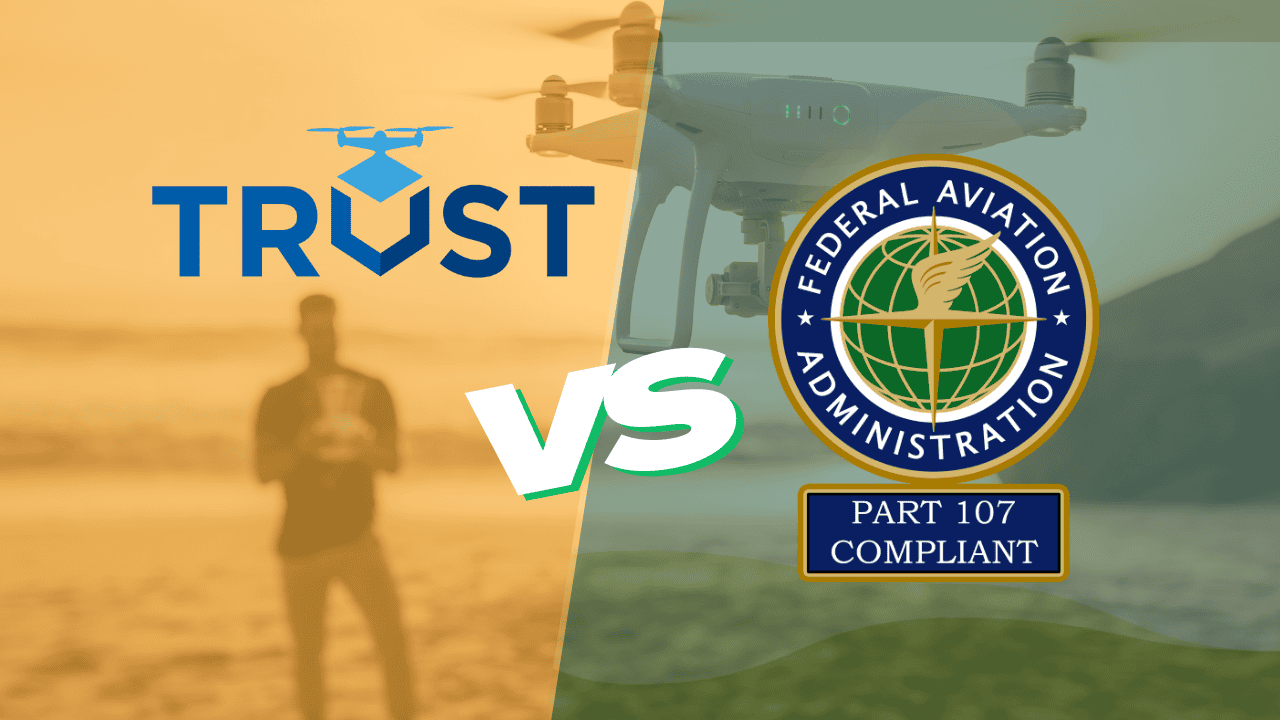
You're not alone in feeling overwhelmed by Part 107 vs TRUST test requirements. The choice sounds complicated, but choosing the right drone license is simpler than most people expect.
When I was figuring this out for myself, I spent way too much time overthinking it.
Which drone license do you need? If you're flying purely for fun, the free TRUST test (Recreational UAS Safety Test) is all you need. If you want to make money with your drone, or use it for business, you need a Part 107 Remote Pilot Certificate ($175 knowledge test plus additional training, but allows commercial operations and advanced flight permissions).
By the end of this guide, you'll know which drone license matches your goals and how to get started today.
Reminder - Always check current FAA sources for the latest regulations. Drone laws change frequently and vary by location. | Updated August 2026
Quick Decision: Which Drone License Is Right For You?
| Your Goal | License Required | Test Cost | Can You Make Money? |
|---|---|---|---|
| Flying for fun only | TRUST test | Free | ❌ No business use |
| YouTube with ads | Part 107 license | $175 | ✅ Full monetization |
| Real estate photos | Part 107 license | $175 | ✅ Client work allowed |
| Instagram for business | Part 107 license | $175 | ✅ Brand partnerships |
| Wedding videos | Part 107 license | $175 | ✅ Professional services |
| Hobby photography | TRUST test | Free | ❌ Can't sell photos |
The simple rule: Any business or money-making use requires a Part 107 license, period.
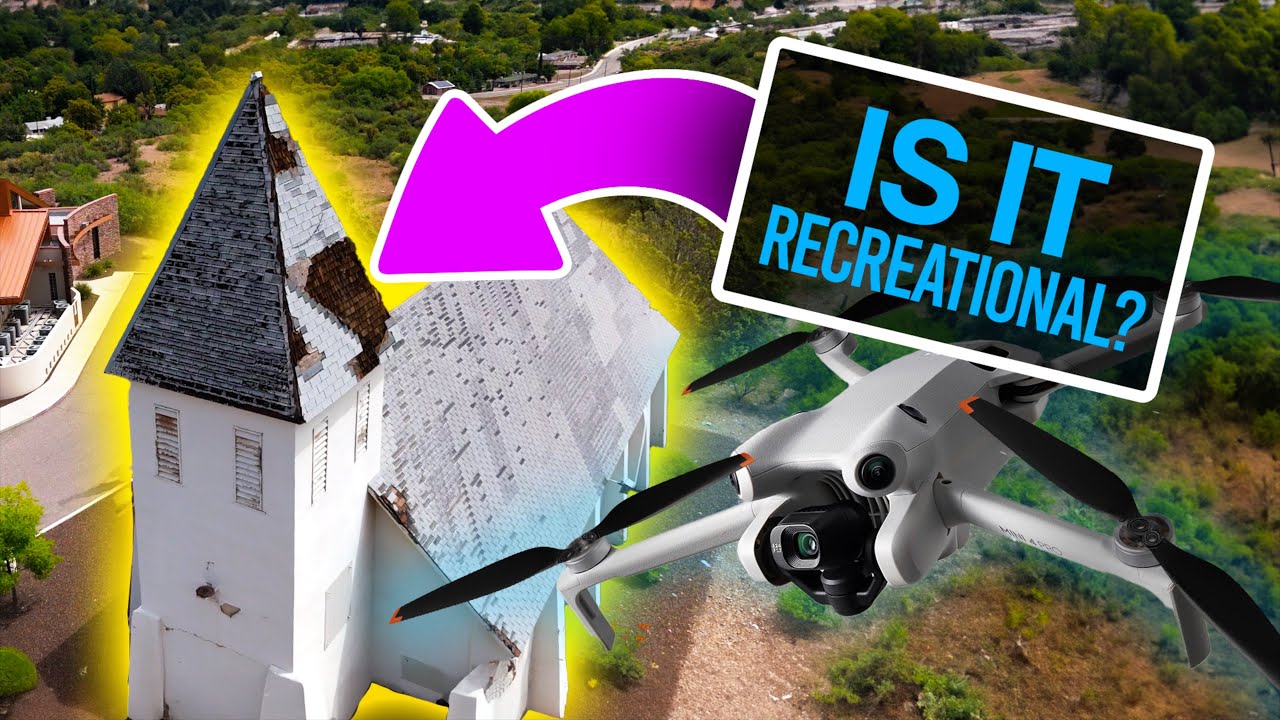
Video: Part 107 vs TRUST Explained
Watch this clear and creative breakdown of the key differences and decision framework:
What Are Recreational Drones and Can They Be Used for Fun?
Yes, drones can absolutely be used for recreational purposes! Recreational drones are simply any drone flown for personal enjoyment, education, or research - not for business. You just need to pass the TRUST test (Recreational UAS Safety Test).
What are recreational drones? Any drone can be recreational depending on how you use it. A $100 toy drone or a $3,000 professional camera drone both count as "recreational" when flown for personal fun with a TRUST test.
Key Differences in Summary
| Feature | Part 107 (Commercial/Business) | Recreational |
|---|---|---|
| Pilot Requirement | Part 107 license | TRUST test (Recreational UAS Safety Test) |
| Drone Registration | All drones must be registered | Drones over 250g must be registered |
| Flight Purpose | For work, business, or non-profit activities | For enjoyment, education, or research |
| Operation Over People | Allowed under specific rules | Not allowed |
What Drone License Do I Need: Part 107 vs TRUST Test?
The main difference is why you're flying, not what drone you use or where you fly.
Meet Jordan: She loved taking landscape photos with her DJI Mini 2 and wanted to sell prints at local art fairs. She assumed that since her drone was under 250g, she could stay recreational forever. Wrong! The moment she planned to sell photos, she needed Part 107 training - regardless of drone size.
The Core Legal Distinction
Recreational (TRUST Test):
- Flying purely for personal enjoyment
- No business purpose or financial gain
- Hobby, education, or entertainment only
Note: For a complete list of authorized FAA TRUST test providers, check out: FAA TRUST Test Directory.
Commercial (Part 107 license):
- Any business-related flying
- Monetized content creation
- Professional services or employment
- Research or commercial purposes
Quick Mythbuster: The same person can fly the same drone in the same location under different rules depending on the purpose of that specific flight. Intent determines what license you need, not drone size or location.
Common Misconceptions
WRONG: "Small drones are automatically recreational."
RIGHT: Any drone can be used commercially or recreationally
WRONG: "Part 107 is only for big commercial operations."
RIGHT: Part 107 covers any business use, including side gigs and content creation
WRONG: "I can fly recreationally and occasionally sell photos."
RIGHT: Any sale or business use requires Part 107 license for that flight
Complete Part 107 vs TRUST Test License Comparison
Testing and License Requirements
| Requirement | Recreational (TRUST) | Part 107 Commercial |
|---|---|---|
| Test Required | TRUST test (free, online) | FAA knowledge test ($175) |
| Test Difficulty | Basic safety (30 minutes) | Aviation knowledge (2 hours) |
| Renewal | No expiration | Every 24 months (free online) |
| Age Requirement | No minimum age | 16+ years old |
| Background Check | None required | TSA security screening |
| Study Time | 30 minutes to 1 hour | 15 to 25 hours |
From what I've researched, the TRUST test is almost embarrassingly easy - it's basically "don't fly into airplanes" common sense. Part 107 actually requires real studying.
Registration Requirements & Remote ID
| Factor | Recreational | Part 107 Commercial |
|---|---|---|
| Registration Needed | Only if drone >250g | 🚨 ALL drones, any weight |
| Registration Cost | $5 for 3 years | $5 for 3 years |
| Registration Type | Recreational registration | Commercial registration |
| Multiple Drones | One number for all drones | Each drone registered separately |
| Remote ID Required | Yes (for most drones 2023+) | Yes (for most drones 2023+) |
Critical: You cannot "double dip" - you must have separate registration numbers for recreational vs commercial use, even for the same drone. Flying commercially with a recreational registration number is a violation.
Did you know? Remote ID applies to both recreational and commercial operations as of September 2023. Your drone must broadcast identification information during flight unless operating in specific exempted areas.
Operational Rules and Restrictions
| Operation | Recreational Rules | Part 107 Rules |
|---|---|---|
| Maximum Altitude | 400 feet AGL | 400 feet AGL |
| Line of Sight | Must maintain visual contact | Must maintain visual contact* |
| Night Flying | ✅ Allowed with anti-collision lighting** | ✅ Allowed with training |
| Over People | Generally prohibited | ✅ Allowed with Category 1-4 drones |
| Controlled Airspace | Requires authorization | Can request authorization |
| Weight Limit | No specific limit | Up to 55 pounds |
*Part 107 allows waivers for beyond visual line of sight operations
**Recreational night flying is allowed for any drone fitted with anti-collision lighting visible for at least 3 statute miles
When in doubt: Default to Part 107 rules or contact the FAA directly at 1-866-TELL-FAA for clarification on complex situations.
Where You Can Fly
| Location Type | Recreational | Part 107 Commercial |
|---|---|---|
| Your Property | ✅ Yes (following safety rules) | ✅ Yes |
| Public Parks | ✅ Usually (check local rules) | ✅ Usually (check local rules) |
| Near Airports | ⚠️ Authorization required | ⚠️ Authorization required |
| National Parks | ❌ Generally prohibited | ❌ Generally prohibited* |
| Private Property | ⚠️ With permission | ⚠️ With permission |
| Events/Crowds | ❌ Not over people | ⚠️ With proper equipment/waivers |
*Recreational drones cannot be flown in US National Parks. This applies to both recreational and commercial operations - the National Park Service prohibits drone flights to protect wildlife and visitor experience.
What You Can Do With Your Content
| Activity | Recreational | Part 107 Commercial |
|---|---|---|
| Personal Photos/Videos | ✅ Keep for yourself | ✅ Business use allowed |
| Social Media Sharing | ✅ Non-monetized only | ✅ All social media use |
| YouTube Monetization | ❌ Requires Part 107 | ✅ Allowed |
| Selling Photos/Videos | ❌ Requires Part 107 | ✅ Allowed |
| Client Work | ❌ Requires Part 107 | ✅ Allowed |
| Business Promotion | ❌ Requires Part 107 | ✅ Allowed |
When Do I Need a Part 107 License?
Figuring out when Part 107 applies can be tricky. Here are clear examples:
Definitely Need Part 107 License
Content Creation:
- YouTube videos with monetization enabled
- Instagram posts for business accounts
- Stock photography or video sales
- Sponsored content or brand partnerships
Professional Services:
- Real estate photography
- Wedding or event videography
- Construction site inspections
- Agricultural surveys or mapping
Business Operations:
- Flying for your employer
- Marketing your own business
- Insurance inspections
- News or media coverage
Even Unpaid Work:
- Building your portfolio for future business
- "Free" work that helps establish business relationships
- Practice flights for commercial skill development
Can Stay Recreational (TRUST Test Only) ✅
Pure Personal Enjoyment:
- Family vacation videos (not shared commercially)
- Hobby photography for personal collection
- Learning to fly for fun
- Racing or recreational flying groups
Educational Use:
- School projects (non-commercial education)
- Personal skill development
- Community education (not for business)
Gray Area Alert: The line can be blurry. When in doubt, get Part 107 license or consult with aviation legal experts. Remember: Intent determines what license you need, not drone size or flight area.
Cost Comparison: TRUST Test vs Part 107 License
Year 1 Total Costs
| Item | Recreational (TRUST) | Part 107 |
|---|---|---|
| Test Fee | Free | $175 |
| Study Materials | Free (TRUST) | $0 to $300 |
| Registration | $5 (if >250g) | $5 |
| Insurance | Optional | $200 to $1,000/year |
| Total Year 1 Cost | $0 to $5 | $380 to $1,480 |
Ongoing Costs
| Item | Recreational | Part 107 |
|---|---|---|
| Renewal | None | Free every 24 months |
| Insurance | Optional | Often required by clients |
| Additional Training | None required | May need specialized training |
Return on Investment
Recreational: Pure cost (no revenue potential)
Part 107: Often recoups investment in 1 to 3 commercial jobs
Business Reality: Most Part 107 pilots earn $200 to $1,000+ per project, making the training cost back quickly. Real estate shoots alone often pay $300 to $800.
From my research, pilots often pay for their entire setup with one wedding gig. The math works out fast if you're serious about it.
What Drone License Do YOU Actually Need?
Choose Recreational (TRUST Test) If:
Your flying is purely for fun:
- Weekend hobby flying
- Family vacation videos
- Learning drone piloting skills
- Recreational racing or groups
You want minimal commitment:
- 30-minute online test
- No ongoing requirements
- No business intentions
You're testing the waters:
- Seeing if you enjoy drone flying
- Not sure about commercial use yet
- Want to start simple
Choose Part 107 License If:
You have any business intentions:
- Want to monetize content
- Considering professional services
- Building skills for future business
- Current or future employment use
You want operational flexibility:
- Night flying capabilities
- Flying over people (with proper equipment)
- Access to controlled airspace
- Advanced operational waivers
You're serious about drones:
- Want detailed knowledge
- Professional credibility
- Maximum legal options
- Long-term drone involvement
How Do I Add Part 107 License Later?
YES! You can hold both licenses and switch based on the purpose of each flight.
How to Switch Between Licenses Without Problems
ESSENTIAL SWITCHING CHECKLIST:
- Register drones correctly for each intended use before flying
- Keep both certificates (TRUST and Part 107) easily accessible
- Always fly under the rule set that matches your stated intent for that specific flight
- Different insurance may be required for commercial vs recreational flights
- Document your intent before each flight for legal protection
Common License Progression:
Weekend warrior approach:
- Use TRUST for personal flying
- Add Part 107 for occasional side jobs
Growing business:
- Start recreational to learn
- Add Part 107 when ready for business
Professional pilot:
- Use Part 107 for work
- Use recreational rules for personal flying (rare)
Insurance Warning: Never assume your personal liability policy covers business use. Commercial drone operations typically require separate commercial insurance, regardless of which certificate you're using.
Timeline for Adding Part 107 License
If you already fly recreationally:
- Study time: 15 to 20 hours (you know basic safety)
- Focus areas: Airspace, weather, specific regulations
- Timeline: 4 to 6 weeks total
- Advantage: Flight experience helps with practical knowledge
What Training You Keep
Existing knowledge:
- Basic safety principles
- Equipment familiarity
- Flight experience
- Airspace awareness
What's New Training
Additional requirements:
- Detailed weather knowledge
- Complex airspace rules
- Regulatory compliance
- Business operational procedures
Common Questions About Drone Licenses
Q: Can a recreational drone be flown in a US National Park?
A: No. Recreational drones cannot be flown in US National Parks. The National Park Service prohibits all drone flights (both recreational and commercial) to protect wildlife and preserve the natural experience for visitors. This is one of the few places where both recreational and Part 107 pilots face the same restriction.
Q: Can drones be used for recreational purposes?
A: Absolutely! Drones are popular for recreational use including hobby flying, personal photography, family videos, and learning to pilot. Just take the free TRUST test and follow basic safety rules.
Q: What are recreational drones?
A: Any drone becomes "recreational" when flown for personal enjoyment, education, or research rather than business. The same physical drone can be used recreationally or commercially depending on the purpose of each flight.
Q: Can I fly recreationally with Part 107 license?
A: Technically yes, but most Part 107 pilots just follow Part 107 rules for all flights since they're already familiar with them and often more permissive.
Q: What if I start recreational and want to go commercial later?
A: Perfect progression! Many pilots start with TRUST to learn basics, then add Part 107 when they're ready for business. Your recreational experience helps with Part 107 preparation.
This seems like the smartest path for most people based on what I've learned. Get comfortable flying first, then worry about the business stuff.
Q: Can I fly someone else's drone commercially?
A: You need Part 107 regardless of who owns the drone. The certification follows the pilot, not the equipment.
Q: What about flying for nonprofit organizations?
A: Generally requires Part 107 license unless it's truly recreational participation. Fundraising, promotion, or organizational benefit typically makes it commercial.
Q: Do I need different insurance for each type?
A: Often yes. Recreational coverage may not apply to commercial operations. Check your policy carefully and consider separate commercial coverage.
Q: Can minors get Part 107 license?
A: No. Part 107 requires minimum age of 16. Families sharing drones must ensure each pilot is appropriately trained for their intended use. Parents can hold Part 107 for commercial family content.
Q: What if I'm not sure about my intent before flying?
A: When in doubt, default to Part 107 rules and ensure you have commercial registration and insurance. It's better to be over-prepared than face violations later.
Legal Risks and Enforcement
Recreational Violations
Common violations:
- Flying without TRUST certification
- Flying in restricted airspace
- Flying over people
- Exceeding altitude limits
Typical penalties:
- Warning letters
- $1,000 to $5,000 fines
- Equipment confiscation
Commercial Violations
Common violations:
- Flying commercially without Part 107 license
- Operating outside certificate privileges
- Violating client airspace restrictions
- Insurance/registration issues
Typical penalties:
- $5,000 to $30,000+ fines
- Certificate suspension
- Criminal charges for serious violations
Enforcement Reality: The FAA actively monitors social media (YouTube, Instagram, TikTok) and business websites. They can identify unlicensed commercial operations through automated scanning and public reports. Even one monetized video can trigger an investigation.
From what I've found in my research, pilots have gotten violations for Instagram posts they made months earlier. The FAA doesn't mess around with this stuff.
Your Next Steps
If You Choose Recreational (TRUST):
✅ This Week:
- [ ] Take the free TRUST test
- [ ] Register drone if over 250g
- [ ] Download B4UFLY app
- [ ] Review recreational flying rules
✅ Ongoing:
- [ ] Stay current with rule changes
- [ ] Fly safely and responsibly
- [ ] Consider Part 107 if interests change
If You Choose Part 107 License:
✅ This Week:
- [ ] Get FAA study materials
- [ ] Create study schedule (15-20 hours)
- [ ] Set up IACRA account
- [ ] Research testing centers
✅ Next 4-6 Weeks:
- [ ] Complete study program
- [ ] Take and pass knowledge test
- [ ] Submit application and background check
- [ ] Register all drones for commercial use
If You're Still Unsure:
✅ Start Here:
- [ ] Take TRUST test (quick and free)
- [ ] Try recreational flying first
- [ ] Evaluate your actual interests and goals
- [ ] Add Part 107 license later if needed
Choosing Your Drone License - Not Sure Which Way to Go?
If you love the hobby: Start with TRUST and see if you want to grow into business opportunities.
If you ever want to make money, promote a brand, or aren't sure: Get Part 107 license sooner rather than later. Most pilots wish they'd started commercial certification earlier - it opens doors you haven't even thought of yet.
Here's what I've learned from all my research: if there's even a 20% chance you might want to make money with your drone someday, just get Part 107 now. Save yourself the hassle of switching later.
Bottom Line
Knowing which certification you need is what keeps your flying legal. Start with recreational if you're purely interested in hobby flying. Choose Part 107 license if you have any business intentions or want maximum operational flexibility. You can always add the other certification later.
Remember: The drone industry is growing rapidly, and having Part 107 opens significantly more opportunities. Even if you start recreationally, many pilots eventually appreciate having the commercial option available.
Join the community: Connect with other pilots through online forums, local meetups, and drone groups. Real pilots share the latest requirements, pro tips, and support for newcomers. The drone community is incredibly welcoming and helpful for pilots at every level.
References
Official FAA Resources: